

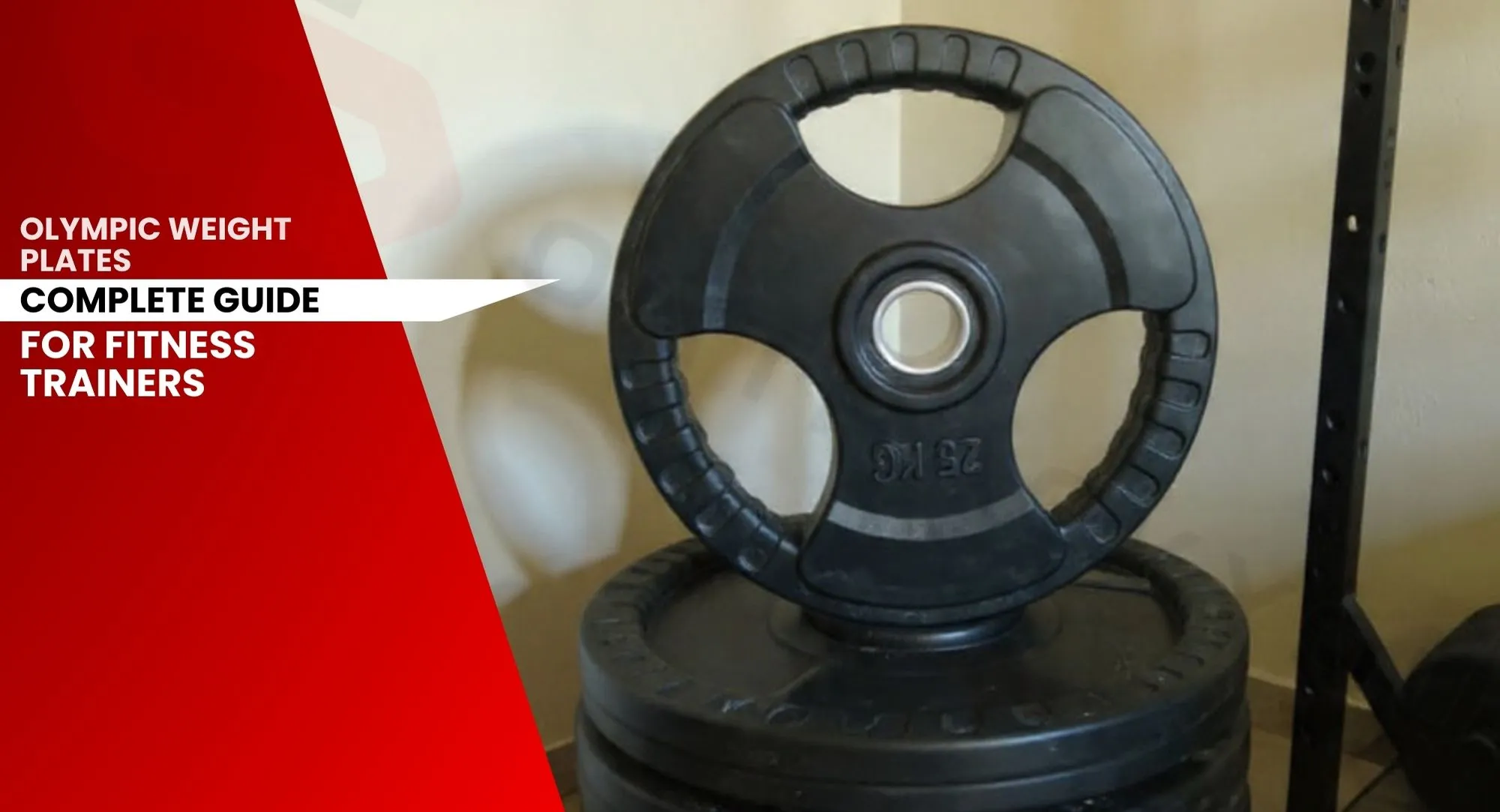
Olympic weight plates are an essential part of strength-training equipment used in gyms, fitness studios and professional training facilities. For fitness trainers, choosing the right plates is not simply about having enough weight on the gym floor. The selection needs to support progressive training, different client abilities, regular equipment usage and safe, practical handling.
This Olympic plates trainer guide explains the important factors trainers should consider when selecting and using Olympic weight plates in India. From understanding plate sizes and weight progression to choosing suitable construction and planning plates for a commercial gym, the aim is to help trainers make informed equipment decisions.
Olympic weight plates are designed to be used with Olympic-sized barbells and compatible plate-loaded equipment. They feature a larger centre opening than standard weight plates and are commonly used for strength and resistance training.
Trainers regularly use Olympic plates for exercises such as squats, deadlifts, bench presses, overhead presses and barbell rows. They can also be used with compatible plate-loaded machines and other strength-training equipment.
Before purchasing Olympic plates, it is important to check the compatibility between the plates, barbells and other equipment in the facility. Plate diameter, centre-hole specification and intended use should all be considered.
Fitness trainers work with clients who have different levels of strength, experience and training objectives. A beginner may require gradual increases in resistance, while an experienced client may require significantly heavier loads.
A well-planned collection of Olympic plates gives trainers greater flexibility when adjusting resistance.
Smaller plates can be useful when a client is progressing gradually, while medium and heavier plates provide the capacity required for more demanding strength exercises.
For this reason, trainers should think about the range and combination of plates, rather than simply focusing on the maximum weight available.
Olympic weight plates are available in a variety of weight options. Common sizes used in strength-training environments include 1.25 kg, 2.5 kg, 5 kg, 10 kg, 15 kg, 20 kg and 25 kg.
The exact range differs between manufacturers and product lines.
For trainers, having several weight options provides greater control over resistance progression. Smaller increments can be particularly useful when a client is improving gradually and a large increase in load would not be appropriate for the training program.
Small plates are often overlooked when gyms purchase equipment, but they can be extremely useful for progressive training.
For example, adding a 1.25 kg plate to each side of a barbell increases the total plate load by 2.5 kg. This gives a trainer another progression step without making a substantially larger increase.
The appropriate load should always be determined by the individual’s training program, exercise technique and ability.
Heavier Olympic plates become increasingly important for clients performing higher-load exercises, particularly compound movements such as squats and deadlifts.
A balanced plate collection should therefore provide both smaller increments and heavier loading options.
Progressive resistance is an important part of many strength-training programs. However, progression does not always mean making a large increase in weight.
For example, if a client is comfortably performing an exercise at a particular load and the training plan calls for a modest increase, smaller Olympic plates can allow the trainer to make that adjustment without making an unnecessarily large jump.
The barbell’s own weight must also be included when calculating total resistance.
The important consideration for trainers is having enough plate options to make appropriate adjustments throughout a client’s training program.
When purchasing Olympic plates, trainers and gym owners should consider matching pairs rather than looking only at the total kilograms available.
A single plate may contribute to the gym’s total inventory, but it cannot normally be used by itself to create an evenly loaded barbell.
Matching pairs are particularly important in commercial gyms, where several clients may be using barbells at the same time.
The required number of pairs will depend on the number of barbells, lifting stations, users and the type of training offered at the facility.
The construction and finish of Olympic plates should be selected according to the training environment and intended usage.
Cast iron is a traditional material used for weight plates. It provides a compact way to add resistance and is commonly used for strength-training applications.
Cast iron plates can be suitable for controlled training environments where appropriate flooring, handling and storage are in place.
Rubber-coated plates feature an additional protective layer around the plate. Depending on the product design, this can help reduce direct impact on flooring and minimise noise compared with exposed metal plates.
Rubber-coated plates can be particularly practical in commercial gyms where equipment is handled frequently throughout the day.
However, the presence of rubber coating does not automatically mean that a plate is designed for uncontrolled dropping. Trainers should always follow the manufacturer’s intended-use recommendations.
OnTrackYou offers Olympic weight plates designed for gym and strength-training applications.
Its Steering Plates range is listed with a cast iron construction, heavy rubber coating and three-cut grip design. The range includes multiple weight options from 1.25 kg through 25 kg.
The three-cut design provides dedicated gripping points, making the plates easier to handle when loading and unloading a barbell. The rubber coating is designed to provide an additional protective layer around the plate.
OTY has been manufacturing fitness equipment in Vadodara, Gujarat since 2012, with product categories including weight plates, dumbbells, barbells and kettlebells.
For trainers and commercial gym operators purchasing multiple plate sizes or larger quantities, working directly with a manufacturer can also simplify product selection and bulk requirements.
Contact OnTrackYou for Olympic Weight Plates and Bulk Requirements
The right plate selection depends on the type of facility and the people using it.
Personal training studios generally need a versatile range of plates because trainers may work with clients at significantly different strength levels.
Having smaller and medium-weight plates can provide flexibility for gradual progression, while heavier options can accommodate stronger clients.
Facilities focused heavily on strength training may require a larger inventory of heavier plates and multiple matching pairs. The number of barbells and lifting stations should be considered when planning the quantity.
Commercial gyms need to account for simultaneous use.
A plate collection that works for one trainer and one client may not be sufficient when several members are performing barbell exercises at the same time.
For this reason, commercial gym owners should consider expected peak usage rather than calculating their requirements only from the total floor area.
Before purchasing Olympic weight plates, trainers should evaluate several factors.
Confirm that the plate centre-hole specification is compatible with the Olympic bars and plate-loaded equipment in use.
Check whether the range includes smaller increments as well as heavier plates. A broad selection provides greater flexibility for progressive training.
Understand the material and construction of the plate and whether it is appropriate for the intended training environment.
Consider whether a rubber-coated, painted or other finish is suitable for the facility’s flooring, noise requirements and usage conditions.
Grip design and overall plate dimensions can influence how easily trainers and members can load and remove plates.
Plan the number of matching pairs according to the number of barbells, lifting stations and expected users.
For commercial or bulk purchases, consider whether the manufacturer can provide the required weight range and quantity consistently.
A gym may have plenty of heavy plates but still lack the smaller increments needed for controlled progression.
Total kilograms do not tell the complete story. Trainers need usable combinations that can be loaded evenly onto a barbell.
Price is important, but construction, weight range, compatibility, handling and intended use should also be considered.
Olympic plates should have a suitable storage system so that different weights remain organised and accessible.
Commercial facilities should consider how many clients may need plates simultaneously rather than planning for one user at a time.
There is no standard number that applies to every trainer or gym.
A useful starting point is to consider the number of barbells and lifting stations, the type of clients being trained and the exercises performed most frequently.
A personal trainer working one-to-one may require a different inventory from a commercial gym with several lifting stations.
Similarly, a strength-focused facility may need more heavier plates, while a general fitness studio may require a broader balance of lighter and medium weights.
The best approach is to build the plate inventory around actual training requirements rather than purchasing a fixed quantity based solely on gym size.
Proper storage is an important part of managing gym equipment.
Keeping plates organised makes it easier for trainers and members to identify the required weight and return equipment after use. It also helps keep the training floor clear.
Regular visual inspection can help identify signs of damage, excessive wear or other issues. Trainers and gym staff should follow the manufacturer’s cleaning and maintenance recommendations for the specific plate construction.
A well-organised storage system combined with routine inspection can help maintain a more efficient training environment.
Before purchasing Olympic plates, trainers can work through four basic questions:
This determines the range of weights required.
This helps identify the plate combinations that will be used most often.
This helps determine how many matching pairs are required.
A personal training studio, strength facility and commercial gym can have very different equipment requirements.
Answering these questions first can make Olympic plate selection more practical and prevent unnecessary purchases.
Olympic weight plates are an important investment for fitness trainers and gym operators. The right selection should provide enough flexibility for progressive training while remaining compatible with the facility’s barbells and equipment.
Instead of focusing only on the heaviest plate available, consider the complete requirement – weight range, matching pairs, construction, handling, compatibility, quantity and storage.
For trainers and commercial gym owners in India, a well-planned Olympic plate collection can support different training levels and make everyday strength-training sessions more efficient.
Build Your Olympic Plate Setup With Gym Equipment Brand
OnTrackYou manufactures Olympic weight plates and other strength-training equipment in Vadodara, Gujarat. Its Steering Plates range includes multiple weight options with cast iron construction, rubber coating and a three-cut grip design.
Discuss your Olympic weight plates requirements, bulk quantities and gym equipment needs with reliable gym equipment manufacturer in India.
Contact OnTrackYou – a renowned gym equipment brand in India
Frequently Asked Questions
What are Olympic weight plates used for?
Olympic weight plates are designed for Olympic-sized barbells and compatible equipment. They are commonly used for strength exercises such as squats, deadlifts, bench presses and overhead presses.
Which Olympic plates should a fitness trainer buy?
A practical collection should include smaller increments as well as medium and heavier plates. The right combination depends on the trainer’s clients, exercises, number of barbells and training environment.
Are rubber-coated Olympic weight plates suitable for commercial gyms?
Rubber-coated plates can be suitable for commercial gyms where noise reduction, floor protection and frequent handling are considerations. Their use should follow the manufacturer’s intended application.
How many Olympic weight plates does a gym need?
There is no fixed quantity. The requirement depends on the number of barbells, lifting stations, users, training styles and commonly used weight combinations.



Copyright © 2026 OnTrackYou | Powered by Kinetic Dreamers
