

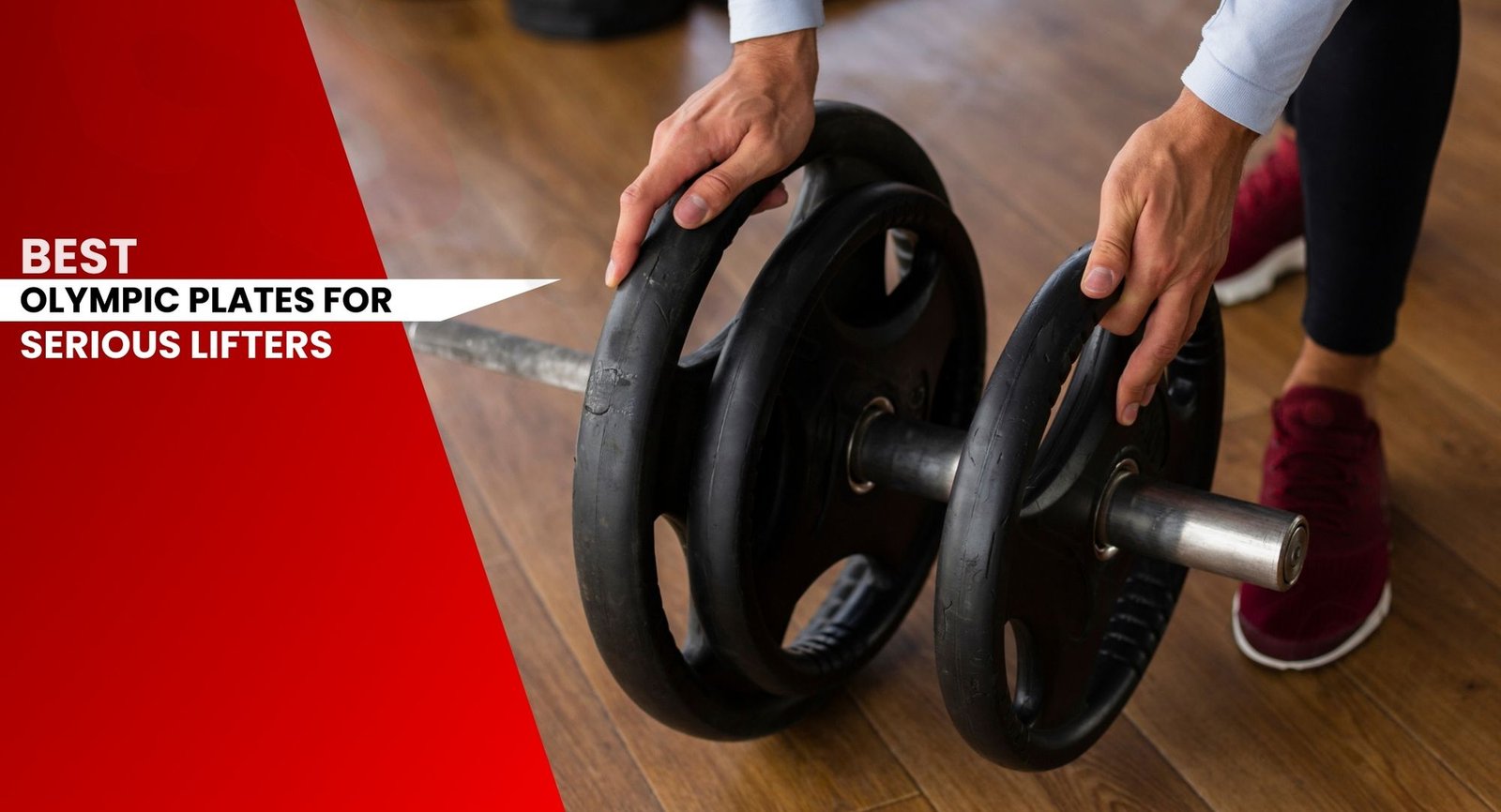
A heavy squat. A demanding deadlift. Another set of controlled repetitions when the muscles are already tired. For serious lifters, every kilogram matters and the weight plates loaded onto the barbell are an essential part of the training setup.
Choosing the best Olympic weight plate in India is not simply about finding the heaviest plates or the lowest price. Commercial gyms need equipment that can handle frequent use, while professional lifters need plates suited to their training style, loading requirements, and performance goals.
The right choice depends on the plate material, fit, construction, weight options, and the environment in which the plates will be used. For gym owners investing in long-term equipment, responsible purchasing and product longevity also deserve consideration.
This guide explains what to look for when choosing Olympic weight plates for serious strength training in India.
Weight plates may appear similar at first glance, but their construction and intended applications can differ considerably.
Olympic weight plates are designed for compatible Olympic barbells, which typically use sleeves around 50 mm in diameter. Before purchasing plates, always check the manufacturer’s specifications to confirm that the centre opening fits the barbell and any plate-loaded equipment you intend to use.
For commercial gyms and professional lifters, the important considerations go beyond compatibility.
Construction quality: Plates should be suitable for the intended training environment and repeated loading.
Secure fit: The centre opening should fit the bar sleeve appropriately, without excessive movement.
Weight accuracy: Consistent weight matters when following structured strength programmes or preparing for competition.
Suitable material: Cast iron, rubber-coated plates, and bumper plates serve different purposes.
Practical handling: Plate shape, grip features, and weight markings can influence how easily users load, unload, and identify plates.
A plate that suits controlled machine-based training may not be the right choice for repeated barbell drops. Understanding these differences is the first step towards making a better purchase.
There is no single plate type that is best for every gym. The right option depends on how the equipment will be used.
1. Cast Iron Olympic Plates: Practical for Conventional Strength Training
Cast iron plates are a common choice for strength-training areas where the barbell is loaded and unloaded under controlled conditions.
Their relatively compact profile can be useful when heavier loads need to fit on a barbell sleeve. They can also suit commercial gyms that want a straightforward plate selection for squats, bench presses, deadlifts, and other resistance exercises.
Before buying, inspect the finish, centre opening, weight markings, and overall construction. Cast iron plates should not be treated as interchangeable with bumper plates when it comes to dropping a loaded barbell.
Best suited for: Conventional strength training, controlled lifting, and selected machine-based applications where the plate specifications are compatible.
2. Rubber-Coated Olympic Weight Plates: A Consideration for Busy Gyms
Rubber-coated plates have a metal core covered with a rubber outer layer. Depending on their design, they can offer a different handling experience from bare cast iron plates and may help reduce some surface contact noise.
However, rubber coating alone does not automatically make a plate suitable for overhead drops. The construction, centre insert, intended application, and manufacturer’s instructions should determine how the plate is used.
For commercial gym owners, checking the quality of the coating and the connection around the centre insert is particularly important when plates will be handled repeatedly.
Best suited for: General commercial strength areas and controlled training, depending on the product’s construction and specifications.
3. Bumper Plates: For Olympic Weightlifting and Dynamic Training
Bumper plates are generally made with a resilient rubber construction and are designed for appropriate lifting environments where loaded barbells may be dropped.
They are commonly considered for Olympic weightlifting, functional training, and dedicated lifting platforms. Full-diameter bumper plates can help maintain a consistent bar height when the bar is loaded with different weight combinations.
Not every bumper plate has the same bounce characteristics, durability, or competition specifications. Buyers should review the manufacturer’s intended use, dimensions, weight tolerance, and dropping guidance before making a decision.
Best suited for: Olympic lifting, suitable functional-training areas, and platforms designed for dynamic barbell work.
4. Calibrated Plates: For Precision-Focused Lifters
For competitive lifters and athletes who follow precise loading programmes, weight accuracy can be especially important.
Calibrated plates are manufactured or adjusted to meet specified weight tolerances. Their actual tolerance should be verified against the product documentation rather than assumed from the term calibrated alone.
They may be appropriate for competition-style powerlifting and training environments where precise loading is a priority. Buyers should also confirm whether the plates meet the rules of the particular federation or competition they are preparing for.
Best suited for: Precision-focused strength training and eligible competition applications.
A professional gym has different purchasing requirements from an individual lifter. Its plates may be used by beginners, experienced members, personal trainers, and strength athletes throughout the day.
That makes the selection process a question of equipment planning rather than simply buying one set.
Start by identifying where the plates will be used.
A conventional free-weight zone may have different requirements from a platform used for Olympic weightlifting. Plate-loaded machines may also have specific compatibility requirements.
Selecting plates according to each area’s purpose helps avoid buying products that are unsuitable for their intended use.
A commercial gym needs enough weight options to support different strength levels and training programmes.
Heavier plates allow users to build substantial loads, while lighter increments help lifters increase resistance progressively. The number of pairs needed will depend on membership, the number of lifting stations, and expected peak-hour demand.
Gym owners should also consider plate storage when planning the total quantity.
Compatibility is essential. Confirm the centre-hole dimensions against the barbell sleeves, and check the specifications of any plate-loaded machines.
For rubber or bumper plates, examine the centre insert and the manufacturer’s guidance on intended use. For cast iron plates, review the finish, shape, and weight markings.
When purchasing for a commercial facility, request the product specifications and applicable warranty information before placing a bulk order.
The cheapest plate is not automatically the most economical choice over time.
Purchase price matters, but so do expected usage, maintenance, replacement needs, warranty coverage, and the ability to obtain matching plates in the future.
A considered buying decision balances these factors against the gym’s budget and training requirements.
For serious lifters, plate selection should reflect the demands of the training programme.
If your primary focus is powerlifting, consider weight accuracy, plate thickness, sleeve capacity, and whether the plates meet your competition requirements.
If you practise Olympic lifts, prioritise bumper plates designed for the intended lifting environment, along with appropriate flooring and platform arrangements.
If you train in a commercial gym with mixed equipment, compatibility and consistent weight increments become particularly useful.
Professional lifters should also check whether the weight markings are easy to identify, whether the plates fit securely, and whether the manufacturer’s specifications support the planned use.
The most suitable Olympic weightmmm plates are the ones that match the training purpose not necessarily the most expensive option on the market.
The Indian fitness equipment market offers products across different price points and construction types. For commercial buyers, comparing manufacturers is an important part of the purchasing process.
Rather than relying on promotional descriptions alone, ask specific questions:
Clear answers make it easier to compare products fairly and reduce the risk of purchasing equipment that does not meet the facility’s needs.
OnTrackYou is a gym equipment manufacturer based in Vadodara, Gujarat. Gym owners and fitness professionals can explore our equipment categories and contact our team to discuss their requirements.
Visit our strength equipment range to explore available equipment for strength-training environments.
For businesses purchasing fitness equipment, product performance is only one part of the wider purchasing decision. Corporate social responsibility (CSR), responsible business practices, and environmental considerations can also be relevant when evaluating suppliers.
In gym equipment procurement, these topics can be approached through practical questions rather than unsupported claims.
Choosing equipment that is suitable for its intended use and maintaining it correctly can help reduce premature replacement. Gym owners should consider repairability, spare-part availability, warranty terms, and maintenance guidance when comparing products.
Buyers can ask manufacturers about material specifications, packaging, durability, and any documented measures to reduce manufacturing or packaging waste.
Environmental benefits should be assessed using evidence specific to the product or manufacturer rather than assumed from a material description alone.
Commercial buyers may also want to understand a supplier’s quality-control processes, product documentation, warranty policies, and approach to customer support.
For organisations with formal procurement policies, documented environmental, social, and governance (ESG) criteria may form part of supplier evaluation.
These considerations can support more informed purchasing decisions. However, a product’s durability does not by itself establish that a manufacturer has a formal CSR programme, and no such programme should be claimed without supporting evidence.
Selecting gym equipment is an important investment for commercial facilities and serious training environments. Buyers need to understand the available products, confirm their specifications, and select equipment that suits the intended use.
OnTrackYou, based in Vadodara, Gujarat, manufactures gym equipment for different fitness environments. Our website provides product categories to help customers explore equipment options for their facilities.
If you are planning a new strength-training area or upgrading an existing gym, begin by identifying the plate types, weight increments, and compatibility requirements your facility needs. You can then discuss your wider equipment requirements with our team.
Explore the OnTrackYou strength equipment range or contact us for assistance with your gym equipment enquiry.
OnTrackYou
1. What are Olympic weight plates?
Olympic weight plates are weight plates designed to fit Olympic barbells, which typically have sleeves around 50 mm in diameter. They are widely used for strength training in commercial gyms and professional training facilities.
2. Which Olympic weight plates are best for heavy lifting?
The best plates depend on your training style. Cast iron plates are suitable for controlled strength training, while bumper plates are designed for appropriate lifting environments where loaded barbells may be dropped.
3. What sizes of Olympic weight plates are available?
Olympic weight plates are available in different weight increments, from lighter plates to heavier options. Available sizes depend on the manufacturer’s product range.
4. Are Olympic weight plates suitable for commercial gyms?
Yes. They are commonly used in commercial strength-training areas. Choose plates with suitable construction, weight specifications, and compatibility for your gym’s equipment and expected usage.
5. What is the difference between bumper plates and cast iron plates?
Cast iron plates are metal plates commonly used for controlled lifting. Bumper plates have a resilient rubber construction and are designed for suitable lifting environments where loaded barbells may be dropped.
Final Thoughts
The best Olympic plates in India are not simply the plates with the highest load capacity or the lowest price. They are the plates that suit the training discipline, fit the equipment correctly, meet the required accuracy, and withstand the demands of their intended environment.
For commercial gym owners, thoughtful purchasing means balancing performance, practical handling, durability, and long-term cost. For professional lifters, it means selecting plates that support consistent training and meet the requirements of their discipline.
By evaluating specifications carefully and asking manufacturers the right questions, buyers can make more confident decisions. Responsible purchasing also means looking beyond promotional claims and considering documented quality, maintenance, and supplier practices.


Copyright © 2026 OnTrackYou | Powered by Kinetic Dreamers
