

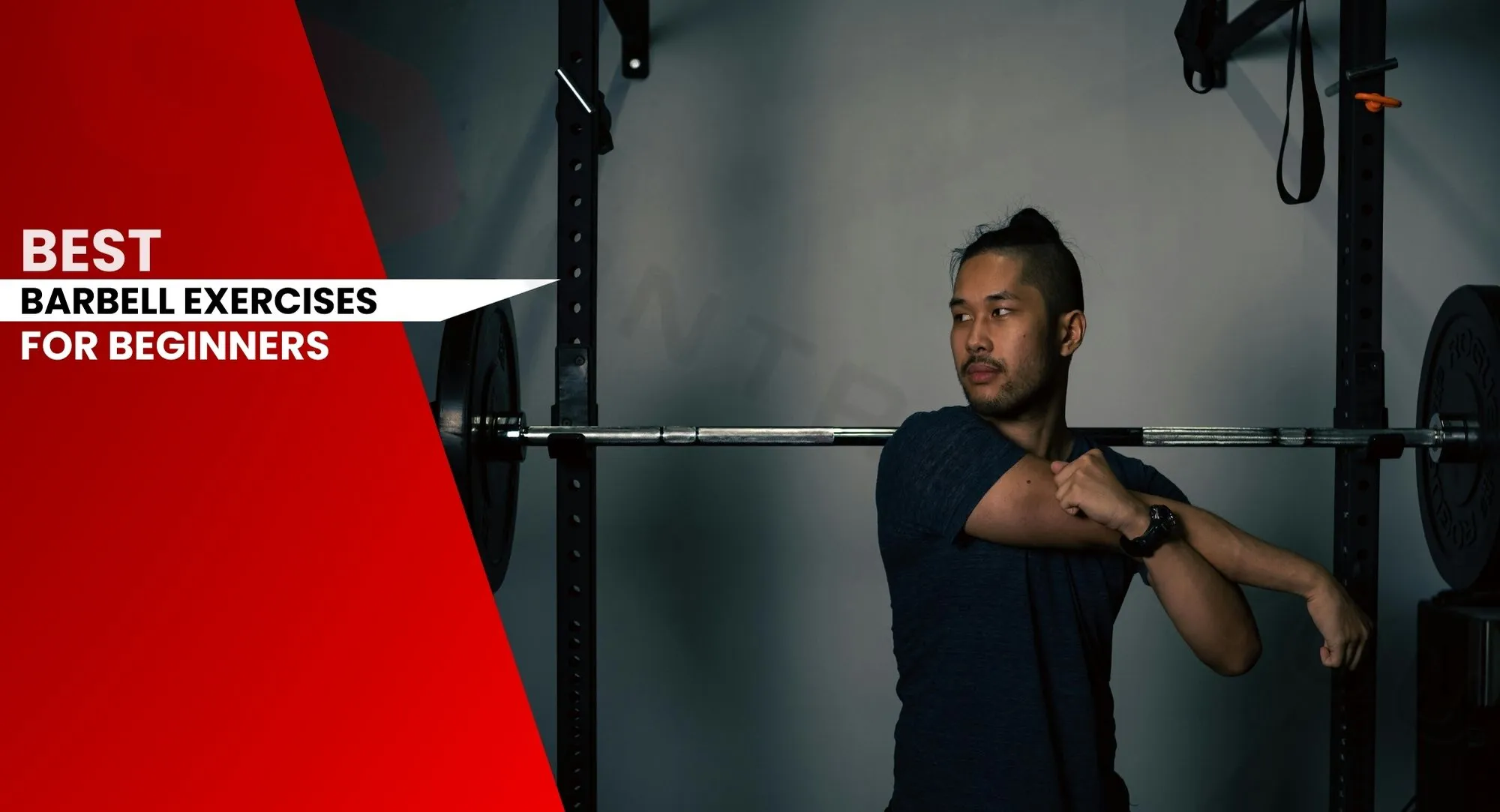
Walk into most Indian gyms and the barbell rack is usually the quietest corner everyone is on the machines, and the barbells sit untouched except for a handful of regulars. That hesitation is understandable. A loaded bar looks intimidating, and nobody wants to get their first squat wrong in front of a room full of people.
Here is the part that gets left out of most beginner advice: a barbell is actually one of the safest and most forgiving tools to learn on, provided you start with the bar alone and build up gradually. Unlike dumbbells, where each hand has to balance its own load independently, a barbell forces both sides of your body to work together. That symmetry is what makes a barbell easier to control than people expect, not harder.
This guide covers the seven barbell exercises every beginner in India should learn first, in the order most coaches actually teach them not ranked by popularity, but by how naturally each one builds the skill needed for the next.
Machines feel safer because they restrict your movement to one fixed path. That is also their biggest limitation for a beginner, your body never learns to stabilise the weight on its own, which is the exact skill that prevents injuries later when you lift anything unsupported, from a barbell to a suitcase.
A barbell, by contrast, asks your whole body to organise itself around the bar. Your core braces, your grip engages, your shoulders set into position and all of that happens before the first rep even starts. This is precisely why barbell movements are called compound exercises: they train several muscle groups and the connective tissue between them in a single motion, which is a more efficient use of your gym time than working one muscle in isolation.
The other underrated advantage, especially relevant in India, is load flexibility. A standard Olympic barbell weighs 20 kg on its own appropriately light for almost every adult beginner to start practising the pattern empty-handed. From there, you add weight in small increments using standard plates, which means your first year of progress can happen entirely on one piece of equipment.
Learn the empty bar first. Every exercise below should be practised with just the 20 kg barbell, no plates until the movement feels stable and controlled for at least two full weeks. This is not a beginner shortcut; competitive lifters return to the empty bar every time they relearn a movement pattern.
Brace your core before every rep, not during it. Take a breath into your belly, tighten your midsection as if expecting a light punch to the stomach, then begin the movement. This single habit prevents the majority of lower back strain seen in new lifters.
Use a power rack or squat stand, not a free-standing bar on the floor. Every exercise that involves unracking weight overhead or onto your back should be performed inside a rack with the safety spotter arms set correctly. This is the single biggest difference between training safely alone and needing a spotter for every set.
Primary muscles: Quadriceps, glutes Secondary muscles: Hamstrings, core, lower back
How to do it
Set the J-hooks on your rack to roughly chest height. Step under the bar and rest it across your upper traps, just below the base of your neck not directly on the neck itself. Grip the bar slightly wider than shoulder-width, lift your chest, and unrack the bar by standing up straight. Step back two controlled steps and set your feet shoulder-width apart with toes turned out slightly.
Take a breath into your belly, brace your core, and lower yourself by pushing your hips back and bending your knees together. Go down until your thighs are at least parallel to the floor, keeping your chest lifted throughout. Drive through your heels to stand back up, breathing out as you finish the rep.
Sets and reps: 3 sets of 8–10 reps with the empty bar; progress to added weight only once form is consistent
Most common mistake: Letting the knees fall inward as you stand up. Picture pushing your knees out toward your toes on every rep, this single cue fixes the issue for most beginners within a few sessions.
Why it comes first: The squat is the foundation for nearly every other lower-body movement. Once your body understands how to brace, hinge, and stand under load, every other exercise on this list becomes noticeably easier to learn.
Primary muscles: Glutes, hamstrings, lower back Secondary muscles: Grip, upper back, core
How to do it
Stand with the bar over the middle of your feet, shins almost touching it. Push your hips back and bend your knees to grip the bar just outside your shins, palms facing you. Drop your hips until your chest is up and your back is flat not rounded. Take a breath, brace your core hard, and stand up by driving your hips forward and pushing through the floor with your legs. Keep the bar close to your shins the entire way up. At the top, stand fully tall without leaning back. Reverse the movement to lower the bar back to the floor with control.
Sets and reps: 3 sets of 6–8 reps with the empty bar; add weight only after your back stays flat through every rep
Most common mistake: Rounding the lower back as the bar leaves the floor. If this happens even once, stop, reset your hip hinge, and reduce the weight. A rounded back under load is the single highest-risk error in barbell training.
Why this one matters: The deadlift teaches the hip hinge the same movement pattern you use every time you pick something heavy off the ground in daily life. Of every exercise on this list, this is the one with the most carryover to everyday safety.
Primary muscles: Chest, triceps Secondary muscles: Front shoulders
How to do it
Lie on a flat bench with your eyes directly under the bar. Plant your feet flat on the floor and pull your shoulder blades together and down into the bench. Grip the bar slightly wider than shoulder-width. Unrack the bar and lower it slowly to your mid-chest, keeping your elbows at roughly a 45-degree angle from your body rather than flared straight out. Press the bar back up to full arm extension without bouncing it off your chest.
Sets and reps: 3 sets of 8–10 reps with the empty bar; progress gradually with small plate increases
Most common mistake: Letting the elbows flare out to 90 degrees from the body. This puts unnecessary strain on the shoulder joint. Keep them tucked closer to your torso throughout the lift.
Safety note for beginners training alone: Always set the safety spotter arms on your rack just below chest height before benching, even with light weight. This single habit means you can train confidently without needing someone to spot you.
Primary muscles: Shoulders, triceps Secondary muscles: Upper chest, core
How to do it
Set the bar at upper-chest height in the rack. Grip it just outside shoulder-width and unrack it, resting it on your front shoulders. Brace your core and squeeze your glutes. Press the bar straight overhead, moving your head slightly back as the bar passes your face, then pushing your head forward once it clears. Lock your arms out fully overhead with your biceps near your ears, then lower the bar back to your shoulders with control.
Sets and reps: 3 sets of 8–10 reps with the empty bar
Most common mistake: Leaning backward to press the bar up. This turns the movement into an incline press and puts strain on the lower back. Keep your torso upright and press in as straight a line as possible.
Why beginners often underestimate this one: The overhead press is humbling most people lift significantly less here than on the bench press, and that is completely normal. Shoulder stability takes longer to build than chest strength, so progress slowly and resist the urge to compare your overhead numbers to your bench numbers.
Primary muscles: Upper back, lats Secondary muscles: Biceps, rear shoulders, core
How to do it
Stand with feet hip-width apart, holding the bar with an overhand grip slightly wider than shoulder-width. Bend your knees slightly and hinge forward at your hips until your torso is at roughly a 45-degree angle, keeping your back flat. Let the bar hang at arm’s length below your chest. Pull the bar up toward your lower ribs, driving your elbows back and squeezing your shoulder blades together at the top. Lower it back down under control without letting your back round.
Sets and reps: 3 sets of 10–12 reps with the empty bar
Most common mistake: Standing too upright, which turns the row into a shrug rather than a back exercise. Keep the hip hinge consistent throughout every rep your torso angle should not change as you pull.
Where this fits: Most beginner programmes are heavy on pressing (bench press, overhead press) and light on pulling. The bent-over row is the single most important corrective exercise to balance that out and protect your shoulders long-term.
Primary muscles: Hamstrings, glutes Secondary muscles: Lower back, grip
How to do it
Hold the bar at hip height with an overhand grip, feet hip-width apart. Keeping a very slight bend in your knees that does not change throughout the movement, push your hips backward and lower the bar down the front of your legs, keeping it close to your body. Lower until you feel a firm stretch through your hamstrings typically mid-shin height then reverse the movement by driving your hips forward to stand back up.
Sets and reps: 3 sets of 10–12 reps with the empty bar
Most common mistake: Bending the knees more as the bar descends, which turns the exercise into a squat and removes the hamstring stretch that makes it effective. The knees should barely move throughout.
Why it’s different from the regular deadlift: The standard deadlift starts from the floor and emphasises the whole posterior chain. The RDL starts from the top and isolates the hamstrings and glutes more directly a useful addition once the standard deadlift pattern feels solid.
Primary muscles: Quadriceps, core Secondary muscles: Upper back, glutes
How to do it
Rest the bar across the front of your shoulders, with your elbows lifted up and forward to create a shelf your fingertips should rest lightly on the bar rather than supporting its weight. Unrack and step back, keeping your elbows high. Squat down with a slightly more upright torso than a back squat requires, keeping your elbows lifted throughout. Drive through your heels to stand back up.
Sets and reps: 3 sets of 6–8 reps with the empty bar this exercise tends to feel harder than the back squat at first
Most common mistake: Letting the elbows drop during the descent, which causes the bar to roll forward off the shoulders. If your wrists or shoulders feel too tight to hold this position comfortably, practise the elbow-up position without the bar first to build the necessary mobility.
Why it’s last on this list: The front squat asks more of your shoulder and wrist mobility than any other exercise here, which is exactly why it benefits from being learned after the other six. By this point, your body already understands the squat pattern the front squat simply asks you to hold it in a more demanding position.
A practical way to structure your first weeks of barbell training is to spread these seven exercises across two alternating full-body sessions, trained two to three times per week with at least one rest day in between.
Day A: Back Squat, Bench Press, Bent-Over Row Day B: Deadlift, Overhead Press, Romanian Deadlift
Add the Front Squat into either day once you are comfortable with all six other movements typically after three to four weeks of consistent training.
You do not need a fully equipped commercial gym to begin barbell training, but you do need three things at minimum: an Olympic barbell, a basic set of weight plates, and a power rack or squat stand with adjustable safety spotter arms. A flat or adjustable bench adds the bench press into your home setup.
For anyone building a home gym in India, starting with a 20 kg Olympic barbell and a modest plate set 1.25 kg to 10 kg increments covers the first six to twelve months of training for most beginners. You can always add heavier plates as your strength progresses.
Is barbell training safe for complete beginners? Yes, when the basics are followed: start with the empty bar, train inside a power rack with the safety spotter arms set correctly, and progress weight gradually only once your form is consistent. Most barbell injuries happen from adding weight too quickly, not from the equipment itself.
How much weight should a beginner start with on a barbell? Start with just the bar a standard Olympic barbell weighs 20 kg. Practise each movement pattern with the empty bar for at least one to two weeks before adding any plates. Once you add weight, increase it in small increments and only when every rep of your current weight feels fully controlled.
Do I need a spotter to do barbell exercises at home? Not if you are training inside a power rack with adjustable safety spotter arms. Set the arms just below your lowest squat depth or just below chest height for bench press, and they will catch the bar safely if you fail a rep. This is one of the main reasons a power rack is a better choice than a free-standing bar for home gym training.
How often should beginners train with barbells each week? Two to three full-body sessions per week, with at least one rest day between sessions, is a sensible starting point. This allows enough recovery time while still building the movement consistency needed to progress safely.
Can barbell exercises help with weight loss as well as strength? Yes. Compound barbell movements recruit large amounts of muscle, which increases the calories burned during the session and supports a higher resting metabolism over time as muscle mass increases. Barbell training paired with a sensible diet is an effective long-term approach to body composition change, though it should not be relied on as the sole method of fat loss.
At OnTrackYou, we manufacture Olympic barbells, weight plates, power racks, and squat stands designed for home gyms, commercial fitness centres, and sports academies across India. Whether you are setting up your very first barbell station or equipping a complete strength training facility, our equipment is built to support beginners through to advanced lifters on the same setup for years.
We also offer gym setup consultations to help you plan a safe, space-efficient barbell training area from the very beginning.
Ready to start your barbell training journey? Contact OnTrackYou for Olympic barbells, weight plates, power racks, and complete gym equipment solutions across India.
OnTrackYou is a manufacturer and supplier of professional fitness equipment for home gyms, commercial fitness centres, and institutional training environments across India.


Copyright © 2026 OnTrackYou | Powered by Kinetic Dreamers
