

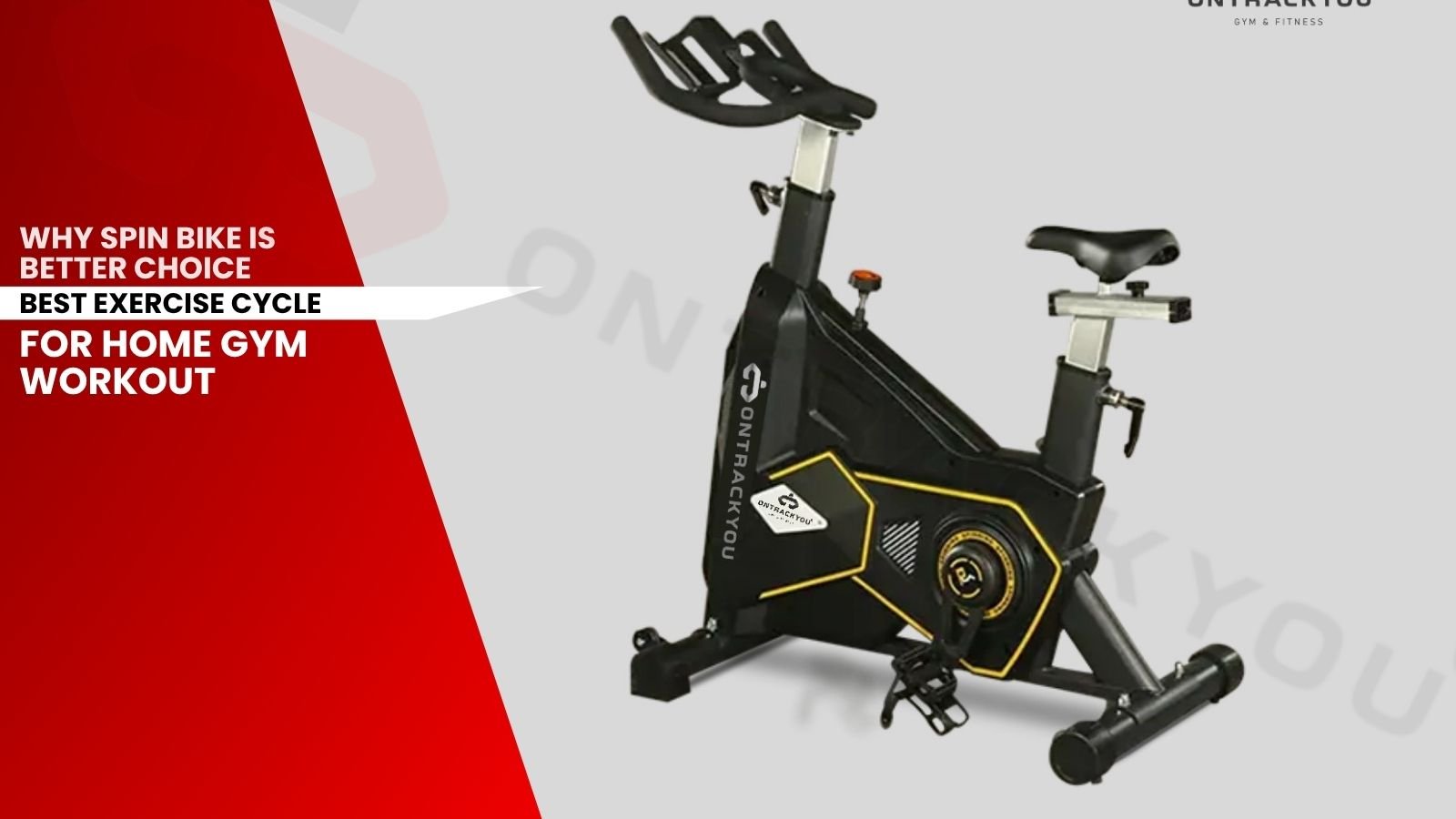
Choosing the best exercise cycle for home use isn’t as straightforward as it seems. A quick search reveals hundreds of options from compact exercise bikes designed for light daily activity to commercial-grade spin bikes built for serious training. Many of these machines look similar in photos, but the actual workout experience can be completely different.
One of the most common questions we hear at OnTrackYou is: “Should I buy a regular exercise cycle, or invest in a spin bike?”
The honest answer is it depends on your goal. If you just want light movement while watching TV in the evening, a basic exercise cycle will do the job fine, and there’s no need to overspend on features you won’t use. But if your goal is sustainable weight loss, better cardiovascular fitness, endurance training, or a home gym cardio setup you won’t outgrow in six months, a spin bike offers clear, measurable advantages.
As a manufacturer of commercial gym equipment, we’ve supplied spin bikes to home gym owners, fitness studios, hotels, and commercial gyms across India. One pattern we see consistently: buyers who invest in a quality spin bike use it more often, simply because the ride feels smoother, more stable, and closer to outdoor cycling.
This guide breaks down the real differences between an exercise cycle and a spin bike, what specs actually matter, and who each option is genuinely right for.
These terms get used interchangeably, but they’re built for different kinds of training.
A traditional exercise cycle for home use typically has a lighter flywheel (2–8 kg), an upright seating position, and modest resistance levels fine for casual, low-intensity movement.
A spin bike is built to simulate a road bike. It uses a heavier flywheel (usually 15–24 kg), adjustable resistance, and a performance-oriented riding position that supports everything from steady endurance rides to high-intensity interval training (HIIT).
If your goal is progressive fitness rather than staying loosely active, the spin bike wins on almost every metric that matters long-term.
To be fair to the other side: if you’re recovering from an injury, cycling casually a couple of times a week, or just want gentle joint-friendly movement while reading or watching TV, a basic exercise cycle is a perfectly reasonable choice and a cheaper one. There’s no need to buy a performance spin bike if you’re not going to push the resistance or train with intensity. The spin bike earns its price premium when you’re actually training, not just moving.
1. Smoother riding experience. A heavier flywheel maintains momentum through every pedal stroke, so the ride feels continuous and natural instead of jerky closer to riding an actual bike than to pedaling a stationary appliance.
2. Better for weight loss. Spin bikes support steady-state cardio, interval training, and endurance sessions in one machine, so you can vary intensity as your fitness improves instead of hitting a ceiling within a few weeks.
3. Low-impact on joints. Cycling puts less stress on knees and ankles than running or many other cardio options, making it a good fit if you want regular training without wear and tear.
4. Works across fitness levels. Adjustable resistance means a beginner can start light and progressively increase load as fitness improves, without needing to replace the machine later.
5. Compact for home gyms. A spin bike takes up a small footprint relative to the workout quality it delivers, which matters in apartments, garages, or a dedicated home gym corner.
6. Built for the long run. Commercial-quality spin bikes are engineered for daily, repeated use which matters if you’re training 4–5 days a week rather than occasionally.
Why Flywheel Weight Matters (24 kg vs Lighter Options)
Flywheel weight is probably the single most misunderstood spec on any spin bike. A heavier flywheel (20–24 kg) stores more rotational momentum, which is what makes the pedal stroke feel smooth and continuous rather than stop-start. Lighter flywheels (under 10 kg) spin down quickly between pedal strokes, which is fine for gentle use but starts to feel unstable once you push resistance up for interval training. A 24 kg flywheel is generally considered the sweet spot for home spin bikes heavy enough for a stable, realistic ride, without the excess bulk of full commercial studio bikes.
A commercial-quality spin bike is a strong fit for home gym owners, apartment users, weight-loss focused beginners, personal trainers, and commercial spaces like gyms, hotels, and corporate wellness rooms. A few real-world examples:
Our Commercial Spin Bike Extreme is built to meet the expectations of both home users and commercial fitness centres, without unnecessary gimmicks:
Explore the OnTrackYou Commercial Spin Bike Extreme →
Check the Latest Price on Amazon →
Pair your spin bike with an Adjustable Bench, Hex Dumbbells, Olympic Weight Plates, a Functional Trainer, and Rubber Gym Flooring for a well-rounded home training setup.
Is a spin bike better than a normal exercise cycle? For structured training, endurance, and weight loss, yes, a spin bike generally offers more resistance range and a more realistic riding feel.
Which exercise cycle is best for weight loss? A spin bike, since it supports both interval training and steady endurance sessions in one machine.
Is a spin bike suitable for beginners? Yes. Resistance is adjustable, so beginners can start light and progress as fitness improves.
How much space does a spin bike require? Most home spin bikes fit comfortably in apartments, garages, or a dedicated home gym corner, needing only a modest footprint.
Why choose a belt-drive spin bike? Belt-drive systems run quieter and need less maintenance than chain-drive systems, with no lubrication required.
If you only want occasional, light movement, a basic exercise cycle is genuinely enough there’s no reason to overspend on capacity you won’t use. But if you want a machine that supports real weight-loss training, grows with your fitness level, and holds up to daily use for years rather than months, a spin bike is the better long-term investment.
Choose a well-built, commercial-quality model with a heavy flywheel, belt-drive system, and adjustable ergonomics, and you’ll end up with a home cardio setup that’s still worth using years from now not one gathering dust in a corner after a few months.
Ready to upgrade your home cardio setup? Explore the OnTrackYou Commercial Spin Bike Extreme or get in touch with our team for help choosing the right fit for your space and goals.



Copyright © 2026 OnTrackYou | Powered by Kinetic Dreamers
